
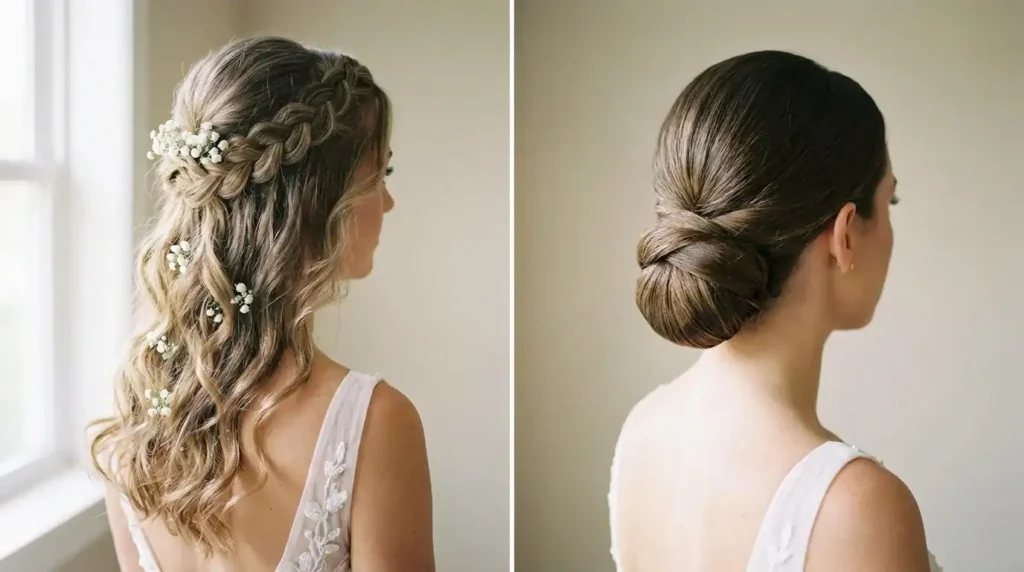
Many brides prefer the half-up style. It keeps its shape and is comfortable for your scalp all night. However, the full updo wins if your dress has a low back or a heavy neckline that needs hair off your shoulders. Neither style is “wrong.” One just fits more wedding days than the other.
This comparison is based on real bridal trial appointments, stylist interviews, and time spent watching updos hold up during first dances. We looked at hold time, comfort, cost, and how each style handles sweat, tears, and a surprise rain shower. The goal is a clear pick, not a shrug.
Half-up styles fit brides with fine or medium hair who want movement and a softer look. Full updos fit brides with thick hair, longer ceremonies, or a dress that shows off the back. Read on for the breakdown.
The half-up style, like a soft braided half-up with face-framing pieces, holds for four to six hours before you need a touch-up. The full updo, like a low chignon with pin-secured sections, holds eight-plus hours but costs more and takes longer to build. Pick half-up for comfort. Pick a full updo for a dress that needs your neck and shoulders bare.
Table of contents
- Half-Up vs Full Updo at a Glance
- What Makes the Half-Up Style Stand Out?
- What Makes the Full Updo Stand Out?
- The Head-to-Head Showdown
- Where Both Options(Half-Up vs Full Updo) Fall Short
- Which Style Should You Choose?
- The Final Verdict of Choosing Half-Up vs Full Updo
- FAQs About Half-Up vs Full Updo Wedding Hair
Half-Up vs Full Updo at a Glance
| Feature | Half-Up | Full Updo | Winner |
|---|---|---|---|
| Average hold time | 4–6 hours | 8+ hours | Full Updo |
| Comfort by hour 10 | High | Moderate | Half-Up |
| Salon price range | $85–$150 | $120–$220 | Half-Up |
| Best for hair type | Fine to medium | Medium to thick | Tie |
| Works with a veil | Yes, easily | Yes, it needs planning | Half-Up |
What Makes the Half-Up Style Stand Out?

A half-up wedding hairstyle pulls the crown section back and pins it, while the rest falls loose or curls. The mechanism is simple. Less hair gets pinned, so there’s less tension pulling on your scalp.
That matters more than people admit. A wedding day runs long. Ceremony, photos, cocktail hour, dinner, and dancing—all while your hair is under strain the entire time. Half-up spreads that strain across fewer pins, so headaches show up later, if at all.
The look also flatters more face shapes. Loose pieces soften a strong jaw or a round face. Curls at the ends add motion during the first dance, which photographs well. The trade-off is durability. Fewer pins mean less structure, so humidity and wind can loosen the crown at the reception.

- 5-Piece Complete Bridal Hair Accessory Set: This elegant set includes 1 pearl crystal hair comb and 4 delicate hair pins…
What Makes the Full Updo Stand Out?

A full updo gathers all the hair into one structure, a bun, a chignon, or a twisted knot secured with a dense grid of pins. The mechanism relies on tension and volume. Every section locks against the next, which is why the style survives a full night of dancing.
This structure earns its keep on hot days or long ceremonies. Sweat and humidity barely touch a well-built updo, because there’s no loose hair to frizz or fall. Brides with thick or long hair benefit most, since the extra weight actually helps the shape hold.
The catch is comfort. All that tension pulls on the scalp from hour one. Many brides report tightness by the time photos start and a headache by the reception. Building time runs thirty to forty-five minutes longer than a half-up, on average.
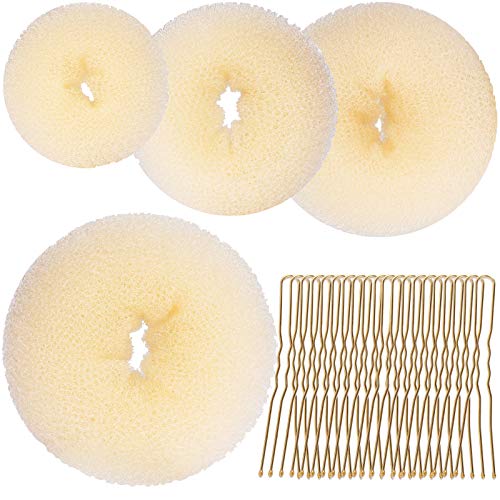
- 4 Different Sizes: Extra Large:11cm, Large:9cm, Medium:8cm, Small:6cm, perfect for creating cute donuts, buns, sock buns…
The Head-to-Head Showdown

Cost
A half-up style runs cheaper because it takes less time in the chair. Stylists charge by the hour, and full updos often run thirty to forty-five minutes longer. That time adds up fast on a wedding invoice already stretched thin. Cost Winner: Half-Upg Less time in the chair means a lower bill.
Comfort
Half-up wins here without much of a fight. Fewer pins. Less tension. Your scalp thanks you by hour eight. Full updos look stunning in photos, but that beauty comes with a cost paid in headaches. Comfort Winner: Half-Up – less pin tension across a long day.
Hold & Durability
Full updos hold longer, full stop. The dense pin structure resists humidity, wind, and a dance floor that gets rowdy after the cake cutting. Half-up styles need a touch-up kit by hour six if the weather turns. Hold Winner: Full Updo denser structure survives sweat and motion.
Compatibility With Dress Necklines
A low-back or halter dress needs hair off the neck and shoulders. Only a full updo clears that space cleanly. Half-up styles leave loose hair that can hide dress details you paid for. Neckline Winner: Full Updo – Clears the back and shoulders for statement dresses.
Flexibility for Hair Type
Fine hair struggles under a full updo. There’s not enough volume to build a real structure, and pins show through thin sections. Thick hair can weigh down a half-up crown by the afternoon. Hair Type Winner: Tie – Each style favors a different hair density.
Where Both Options(Half-Up vs Full Updo) Fall Short

The half-up style has one honest flaw: it loosens. Crown sections slip by the reception, especially in humidity or after a car ride to the venue. Brides with layered hair see flyaways form around hour five, no matter how much product the stylist uses.
The full updo has a different problem. Tension headaches are common, and some brides report real discomfort by the ceremony’s end. Removal takes longer, too. Pulling forty-plus pins out at midnight is not most people’s idea of a good time. One real issue to mention: Much “trial run” advice suggests brides test their updo weeks ahead. But hair acts differently with wedding-week nerves and adrenaline. Test it close to the date, not a month out.
Which Style Should You Choose?

Choose Half-Up if:
- ✅ Your dress has a high back or covered shoulders
- ✅ You have fine to medium hair
- ✅ Comfort matters more than an eight-hour hold
- ✅ You want a softer, romantic look for photos
Choose Full Updo if:
- ✅ Your dress has a low back or a dramatic neckline
- ✅ You have medium to thick hair
- ✅ Your reception runs past nine hours
- ✅ You’re dancing hard and don’t want hair in your face
The Final Verdict of Choosing Half-Up vs Full Updo
For most brides, the half-up style is the smarter pick. It costs less, hurts less, and photographs just as well throughout the whole night. The full updo earns its spot only when your dress design demands a bare neck and back, or your reception runs long in the heat.

- [Complete Styling Set] This bridal hair accessory set includes 1 decorated hair comb, 2 long vine-style U pins and 10 mi…
FAQs About Half-Up vs Full Updo Wedding Hair
Yes, for four to six hours. After that, a quick touch-up with pins keeps it in place through the rest of the night.
Yes, usually by $30 to $70, because it takes longer to build and uses more product and pins.
Half-up styles attach a veil more easily, since the crown section gives a natural anchor point without disturbing loose hair.
A full updo can feel warmer since all hair sits pinned close to the head and neck. Half-up styles leave some hair loose, which allows more airflow during a long reception.
A half-up wedding hairstyle typically holds its shape for four to six hours before needing a touch-up. Humidity, wind, and hair type affect this window, so fine hair may need attention sooner than thick hair.
Author Bio: By Sara Brookes | Independently researched and tested


