
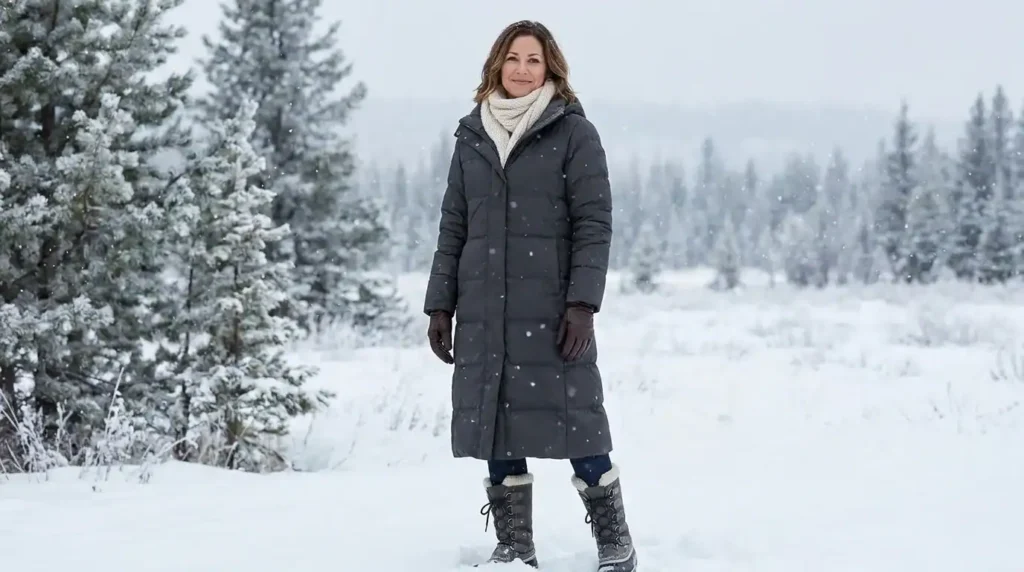
The forecast says twenty below, and that “warm” coat from last winter suddenly feels like tissue paper. You layer on two sweaters anyway. You still end up shivering at the mailbox.
If this sounds familiar, you’re not doing anything wrong. You’re just missing the right system.
After 40, your body loses heat faster than it used to. Circulation slows. The cold hits harder and lingers longer. Generic winter advice built for mild chill doesn’t cut it when temperatures drop into true extreme-cold territory.
This guide has everything for extreme cold weather essentials. It includes the layers, fabrics, and accessories that really keep you warm when the wind chill is dangerous, not just uncomfortable.
Extreme cold weather essentials are:

- A moisture-wicking base layer
- An insulating mid layer
- A windproof, waterproof outer shell
- Wool socks
- Insulated boots
- Accessories for your head, neck, and hands
These items help keep you warm and dry.
These are your body’s biggest heat-loss points, and protecting them is non-negotiable below freezing.
Key takeaways:
- A three-layer system (base, mid, shell) traps more real warmth than one thick coat, no matter how expensive that coat is.
- Merino wool, down, and fleece hold heat even when damp. Cotton does the opposite and should stay out of your cold weather wardrobe entirely.
- Your hands, feet, and head lose heat fastest, so a complete accessory checklist matters as much as your coat does.
What Are Extreme Cold Weather Essentials?

Extreme cold weather essentials are clothing and accessories made to protect you in temperatures below about 10°F. They also guard against wind chill that can cause frostbite. This is different from everyday winter wear. A stylish wool coat works fine for a 35°F commute. It will not protect you during a polar vortex, an ice-fishing trip, or a week in a genuinely frigid climate.
This guide focuses on dressing for conditions where exposed skin can develop frostbite in under 30 minutes. Think sub-zero mornings, blizzard warnings, mountain towns, and far-north travel. It covers layering science, fabric choice, and the accessories that close the gaps a coat alone can’t cover.
Women over 40 often feel cold more intensely due to shifting circulation and hormonal changes. That’s exactly why this guide treats extreme cold as its own category, not a slightly colder version of regular winter dressing.
The Fundamentals: The Three-Layer System Every Cold Weather Wardrobe Needs

Real cold weather protection comes from three layers working together, not from one heavy item. Each layer has one job. Skip a layer, and the whole system breaks down.
Your Base Layer: Why Moisture-Wicking Matters More Than Warmth
Your base layer sits against your skin, so its real job is moving sweat away from your body. Damp skin loses heat up to 25 times faster than dry skin.
Choose a moisture-wicking base layer in merino wool or a technical synthetic blend. Skip cotton long johns entirely. They trap moisture instead of moving it, which leaves you colder, not warmer.
Your Mid Layer: Trapping Heat Without Bulk
The mid layer is your main insulation. It traps warm air close to your body. Fleece, down, and synthetic puffer insulation all work by creating tiny air pockets that hold heat.
Reach for a fleece pullover or a lightweight puffer vest here. A thinner, well-insulated mid-layer beats one bulky sweater every time, and it layers more comfortably under a coat.
Your Outer Shell: Blocking Wind, Snow, and Rain
Your outer shell blocks wind, snow, and moisture from reaching your insulating layers. A shell that isn’t windproof lets cold air cut straight through everything underneath it.
Look for a shell rated windproof and waterproof, not just “water-resistant.” In true extreme cold, wind chill does more damage than the raw temperature on its own.
The Fourth Layer Most Guides Forget: Accessories as Insulation
A perfect three-layer system still fails if your hands, feet, head, and neck are exposed. Treat insulated gloves, wool socks, a real winter hat, and a neck gaiter as a fourth layer, not an afterthought.
What Fabrics Keep You Warmest in Extreme Cold?

The right fabric decides whether your layering system actually works. Merino wool, down, and quality fleece hold their insulating power even when damp, while cotton loses nearly all of its warmth once it gets wet.
Merino Wool vs. Synthetic Base Layers: Which Wins in Sub-Zero Temps
Merino wool regulates temperature naturally, resists odor, and stays warm even when slightly damp. Synthetic base layers dry faster and often cost less.
For genuinely extreme cold, merino wool has the edge. It keeps insulating even if you sweat during activity, which synthetic fabric does less effectively.
Why Down Still Beats Synthetic Insulation for Dry Cold
Down offers the best warmth-to-weight ratio of any insulation available. In dry, extreme cold, a quality down parka outperforms synthetic fill at a fraction of the bulk.
The one exception: wet climates. Synthetic insulation keeps some warmth even when soaked, while down loses performance until it fully dries.
The One Fabric to Avoid Completely: Cotton
Cotton absorbs moisture and holds onto it. Once damp, it stops insulating and actively pulls heat away from your skin. This includes cotton socks, cotton thermals, and cotton-blend hoodies.
Keep cotton out of every layer when you’re dressing for genuine extreme cold, no matter how soft or familiar it feels.
Extreme Cold Weather Essentials by Activity and Setting

Your exact essentials shift depending on how long you’ll be outside and what you’re doing. A five-minute walk to the car needs less than a full day outdoors.
Dressing for a Daily Commute in Sub-Zero Temperatures
For short exposure between warm indoor spaces, prioritize your outer shell, insulated gloves, and a warm hat. A knee-length puffer coat with a wind-resistant shell is perfect for most commutes. You won’t need your heaviest gear.
What to Wear for Outdoor Winter Activities (Skiing, Sledding, Ice Fishing)
Being outside for a long time needs the full gear. You need a moisture-wicking base, an insulated mid-layer, a waterproof shell, insulated boots, and hand and toe warmers. Add ski goggles or sunglasses to protect your eyes from wind and glare.
Cold Weather Essentials for Travel to Extreme Climates
Traveling somewhere colder than home? Pack versatile layers you can add or remove rather than one giant coat. A packable down jacket, wool socks, and compact hand warmers travel well and adapt to changing conditions.
Cold Weather Dressing Mistakes That Leave You Cold (and How to Fix Them)

Most cold weather complaints trace back to a handful of repeated mistakes. Fixing these solves the problem faster than buying more gear.
Wearing One Thick Coat Instead of Layers
A single heavy coat traps less warmth than a proper three-layer system, and it leaves you with no way to adjust as conditions change. Build your outfit in layers, every time.
Ignoring Your Hands, Feet, and Head
You lose a significant amount of body heat through your extremities. Thin gloves and ankle socks undo an otherwise perfect outfit. Invest in real insulated gloves and wool socks rated for extreme cold.
Choosing Style Over Function in Genuine Extreme Cold
A fashion-first coat with no real insulation looks great for five minutes before the cold sets in. Save lightweight coats for mild winter days. Use proper extreme cold weather gear for true sub-zero conditions.
Skipping Hand and Toe Warmers When You Actually Need Them
Disposable or rechargeable hand and toe warmers are affordable. They help prevent frostbite during long outdoor activities. Skip them on a quick errand, but never skip them for sustained time outside in dangerous cold.
Expert Styling Tips & Practical Guidance for Extreme Cold Weather Essentials

Most guides stop at “wear layers.” Here’s what separates a system that actually works from one that just looks right on paper.
Check wind chill, not just temperature. A 10°F day with 30 mph winds behaves like minus-10°F on exposed skin. Dress for the wind chill number, always.
After 40, add one more layer than you think you need. Slower circulation means you feel cold sooner and more intensely. A lightweight extra mid layer costs you nothing in mobility and buys real comfort.
Heated layers are the biggest shift for 2026. Battery-powered heated vests and insoles are now common, affordable, and truly effective for long outdoor use. They’re especially helpful for those dealing with circulation issues.
Fit your outer shell over your full layering system before buying it. A coat that fits perfectly with no layers underneath will feel restrictive and let cold air in once you add your base and mid layers.
FAQs For Cold Weather Essentials
Any colour works well, but darker shades absorb more sunlight. This can make them feel a bit warmer outside. Bright colours, like orange and yellow, are great for visibility. They’re useful during activities such as hiking, skiing, or walking near roads in low winter light.
It’s best to avoid cotton entirely in extreme cold. Cotton soaks up sweat and moisture, but it almost loses all its warmth when wet. Choose merino wool or a technical synthetic base layer instead for reliable warmth.
Avoid cotton layers, thin gloves, ankle socks, and any single heavy coat worn without layers underneath. Skip leather-soled boots that lack proper tread. They provide little grip or insulation on ice and packed snow.
Women over 40 often feel colder because of slower circulation. So, adding an extra mid-layer can really help. Heated insoles or a heated vest can ease cold sensitivity from poor circulation when you’re outdoors for a long time.
Regular jeans provide little insulation and soak up moisture fast. This makes them a bad option for real extreme cold. Fleece-lined leggings worn under insulated or wind-resistant pants keep you warmer. They also protect you better.
Conclusion
Staying warm in extreme cold isn’t about owning one perfect, expensive coat. It comes down to a proper three-layer system, the right fabrics, and covering every heat-loss point from your head to your feet.
If you only change one thing today, swap any cotton base layers for merino wool or a technical synthetic. That single switch solves the most common reason people stay cold even when they feel like they’re dressed warmly enough.
You now know exactly what to look for, what to avoid, and how to adjust as temperatures drop further. Bookmark this guide for the next cold snap, and share it with anyone who dreads dressing for winter.


