

Quick Answer: Velvet hair colours are rich, multi-dimensional shades. They have a soft, satin-like finish. The roots are deeper, while the mid-lengths are lighter. They never look brassy or flat. Red velvet hair colour blends copper and burgundy. It adds warmth to mature skin without the harshness of a single-process red.
What It Is: Deep, tonal hair color with a soft satin finish. How It Works: Two to three close tones woven together, sealed with a gloss. Why It Matters: Flat color ages the face; velvet dimension softens lines and adds light.
If you’ve spotted this phrase on social media and think it’s just a trend for twenty-year-olds, that’s fair. Let’s look at what it actually means and why it may be the most 50+-friendly color trend in years.

Why Velvet Hair Colors Are Everywhere Right Now

The name tells you everything. Velvet fabric absorbs light in one direction and softly releases it in another. It’s deep and plush, never shiny like satin or flat like matte. Colorists spent years chasing that exact behavior in hair.
Single-process color dominated salons for a decade, and it showed. One flat tone exposes every root line and drains warmth from mature skin. Dimensional techniques like balayage add depth, but they can look stripy or beachy. This youthful style might feel costume-like after 50.
Velvet coloring splits the difference. The tones sit close together on the color level system, so hair looks expensive and calm instead of highlighted. The result suits women who want their color noticed for its quality, not its contrast.
In my twenty-two years behind the chair, the happiest clients aren’t those chasing the loudest trends. They are the ones who take the trend’s principle — in this case, depth plus softness — and let it work quietly.
How the Velvet Effect Actually Works
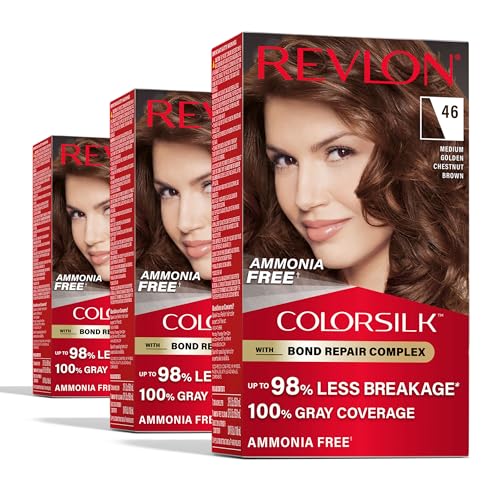
- 100% GRAY COVERAGE: Ammonia-free⁴ color delivers 100% gray coverage and up to 8 weeks of vibrant color; works on all hai…
- HAIR LOOKS HEALTHIER: Up to 94% silkier² and up to 9X shinier hair³; leaves hair in better condition than before colorin…
- HELPS REPAIR HAIR: Bond Repair Complex + Vegan Keratin Fillers help repair hair
Think of velvet hair color like a well-layered paint wall. A single flat coat shows every flaw. But two or three coats in slightly different tones of the same family create depth that shifts as you move.
Your colorist builds the velvet effect the same way. She starts with a rich base tone, often a level 4 or 5 brunette, or a deep red for the red velvet hair color look. Then she weaves in one or two tones half a step lighter through the mid-lengths and ends. Finally, she seals everything with a demi-permanent gloss.
The gloss does the velvet’s real work. It fills the hair cuticle so light reflects in one soft sheet instead of scattering. The satin finish photographs beautifully. It gives red hair a luxurious, lit-from-within look on mature hair.
Fit note for mature hair: Texture changes after 50 hair grows finer, gray grows wiry. Velvet colouring is effective here. The low-contrast aspect hides regrowth between appointments. Plus, the gloss treatment also conditions coarse grey strands.
Who Velvet Hair Colors Work Best For

The velvet principle works on every base color: brunette, black, copper, and red. Your best shade is decided by your undertone. This becomes more important after 50, as skin loses warmth and contrast with age.
Warm, golden, or olive skin glows in red velvet shades with copper and auburn reflections. Cool, rosy, or neutral skin looks great in burgundy reds and cool brunette velvets. Silver-haired women in a colour transition can use a soft velvet gloss as a bridge shade.
| Your Skin Undertone | Best Velvet Shade | Why It Works |
| Warm / golden / olive auburn brunette carries | Copper-red velvet, your skin still | Echoes the warmth |
| Cool / rosy cool espresso fighting it | Burgundy red velvet, flush instead of | Matches your natural |
| Neutral chocolate brunette flattering | True red velvet depth does the | The full range works; |
Gray / silver transition: Soft red-brown gloss hides the wiry line between coloured and natural hair
Try this: Hold a copper fabric and a burgundy fabric under your chin in daylight. The one that makes shadows under your eyes look softer is your velvet family.
Red Velvet Hair Color vs. Classic Single-Process Red
This is where some women over 50 have concerns. Classic red hair colour done in one flat process can be high-maintenance and may fade quickly. Velvet red can address many concerns about wearing red hair after 50.
| Factor | Classic Single-Red | Red Velvet Hair Color |
| Regrowth visibility 3–4 weeks | Harsh root line every 8–10 weeks | Soft, blended grow-out |
| Fading copper-neutral | Fades to brassy orange | Fades to a soft |
| Effect on skin and wrinkles | Can emphasize redness | Deep tone softens and warms mature skin |
| Shine | Flat or artificially glossy | Natural satin finish |
Upkeep cost: Color every 4 weeks + gloss every 8–10 weeks
3 Velvet Looks Worth Copying

Every strong red-haired woman look over 50 follows the same rule: depth at the root, softness everywhere else. These three formulas repeat that principle at different intensities.
The Quiet Red Velvet: A level 5 red-brown base with copper reflects through the ends, plus a clear gloss. Reads as “rich brunette” indoors, turns heads in sunlight. The lowest-maintenance entry point.
The True Red Velvet: Deep burgundy base with red velvet mid-tones, worn in a soft bob or waves. This is the version dominating the red hair aesthetic on Pinterest — and it flatters neutral and cool skin most.
The Brunette Velvet: Espresso base with chocolate and chestnut woven mid-tones. For women who fear red commitment but want the same dimensional richness.
Cost, Maintenance, and What to Ask Your Colorist
Velvet colouring costs about the same as a good dimensional colour. The key value is in the gloss, which most women need every 6 to 8 weeks.
At the consultation, say three things. First: “I want tones within half a level of each other — no stripes.” Second: “Seal it with a gloss, not a glaze.” Third: “Work with my gray pattern, not against it.”
At home, the rules are simple. Wash in cool water with a color-safe, sulfate-free shampoo no more than three times a week. Heat-protect every style. And book the gloss before the color looks faded; by then, you have already lost the velvet finish.
Budget-friendly tip: If salon colour is too pricey, try a demi-permanent velvet gloss. You can get this at a beauty school or use an at-home kit. It gives you 70% of the effect for much less money.
FAQs
Less than most dimensional colors. Because the tones sit close together, regrowth blends softly for 8 to 10 weeks. The gloss is the real commitment — plan on refreshing it every 6 to 8 weeks to keep the satin finish.
Yes, it is one of the most flattering reds for mature skin. The rich, multi-tonal base brings warmth and softness that plain single-process red lacks. Plus, the blended regrowth hides gray hair between appointments.
A velvet base with permanent color covers gray fully. The dimensional mid-tones and gloss are then applied over it. For bold gray patterns, your colorist might blend the gray into the texture instead of battling every strand.
A true multi-tonal velvet needs a colorist. Try an at-home demi-permanent gloss in red velvet or brunette velvet. It can refresh your colour. It adds softness and dimension, helping you go longer between salon visits.
Balayage paints lightener onto the surface for contrast. Velvet coloring weaves two to three close tones together through the entire head and seals them with gloss. Velvet is about depth; balayage is about lightness.
Conclusion:
Velvet hair colors are not a youth trend you have missed; they are a technique your hair has been waiting for. A rich tone, smooth texture, subtle enhancement, and a finish that flatters mature skin without showing flaws.


